Project Selection Phase
At Misk Foundation, we measure the actual need of beneficiaries for assistance whether financial, tangible or intangible (counseling, training, social support and building/supporting projects) in order to allocate resources to those in greatest need and to achieve sustainable impact.
Criteria that must be met to achieve optimal selection of beneficiaries:
However, Misk is open to other projects that achieve the following criteria:
Unemployed
Homemaker with no breadwinner
Limited income’s
Families in rural areas
Disabled
Patients
Orphans
Returnee expatriates
We evaluate beneficiaries across two domains, tangible and intangible, to ensure that support reaches those who truly need it and to achieve sustainable impact through our developmental projects, as follows:
Income of the individual/family: The extent of reliance on unstable income sources, such as external aid and unemployment benefits..
|
Assets and essential resources owned by the beneficiary: Owning a small agricultural plot, basic equipment, productive livestock, essential household equipment or having the foundational aspects of a project they ran forcibly halted.
|
Unsecured staple needs: Food, shelter, basic health, clothing, early education, and other essentials.
|
Financial obligations and overdue debts or bank loans: Being in a debt that affects the family’s ability to achieve stable income or start a small business.
|
Scalability and economic development potential: The potential to utilize the support provided by MISK to build sustainable income and achieve financial independence.
|
Ability to commit and follow up: Beneficiaries and their family must demonstrate a clear willingness to adhere to the follow-up plan, engage in training, and meet scheduled timelines.
|
Community development potential: The ability to build constructive relationships with traders and other beneficiaries to amplify positive community impact.
|
Ability to achieve and disseminate benefits: A strong aspiration to improve economic outcomes, education level, and health status at both the individual and community levels.
|
Personal development and application of skills and training: The beneficiary’s readiness to acquire and apply new skills (e.g. farm management, resource management, financial literacy and more).
|
Receptiveness to guidance and advice: Full openness to leveraging the guidance and training they receive to maximize economic benefits
|
Tangible Criteria
Intangible Criteria
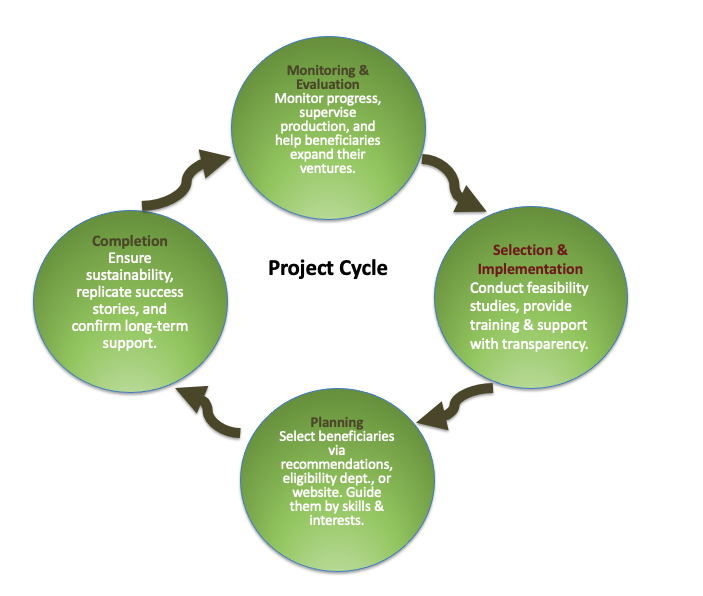
Feasibility Study Phase
Localizing Design
Projects are tailored to local conditions – for example, implementing a tomato cultivation project in plastic greenhouses in rural Damascus.
Community Engagement
We prioritize local community participation, particularly among youth and women, to ensure project sustainability and job creation.
Monitoring & Development
Regular project evaluation informs continuous improvement and iterative development.
Scaling Successful Models
Proven initiatives are replicated in suitable locations, such as our “Agricultural Nursery” or “Dairy Product Processing” projects.
Product Value Chain